


Stewarz GM
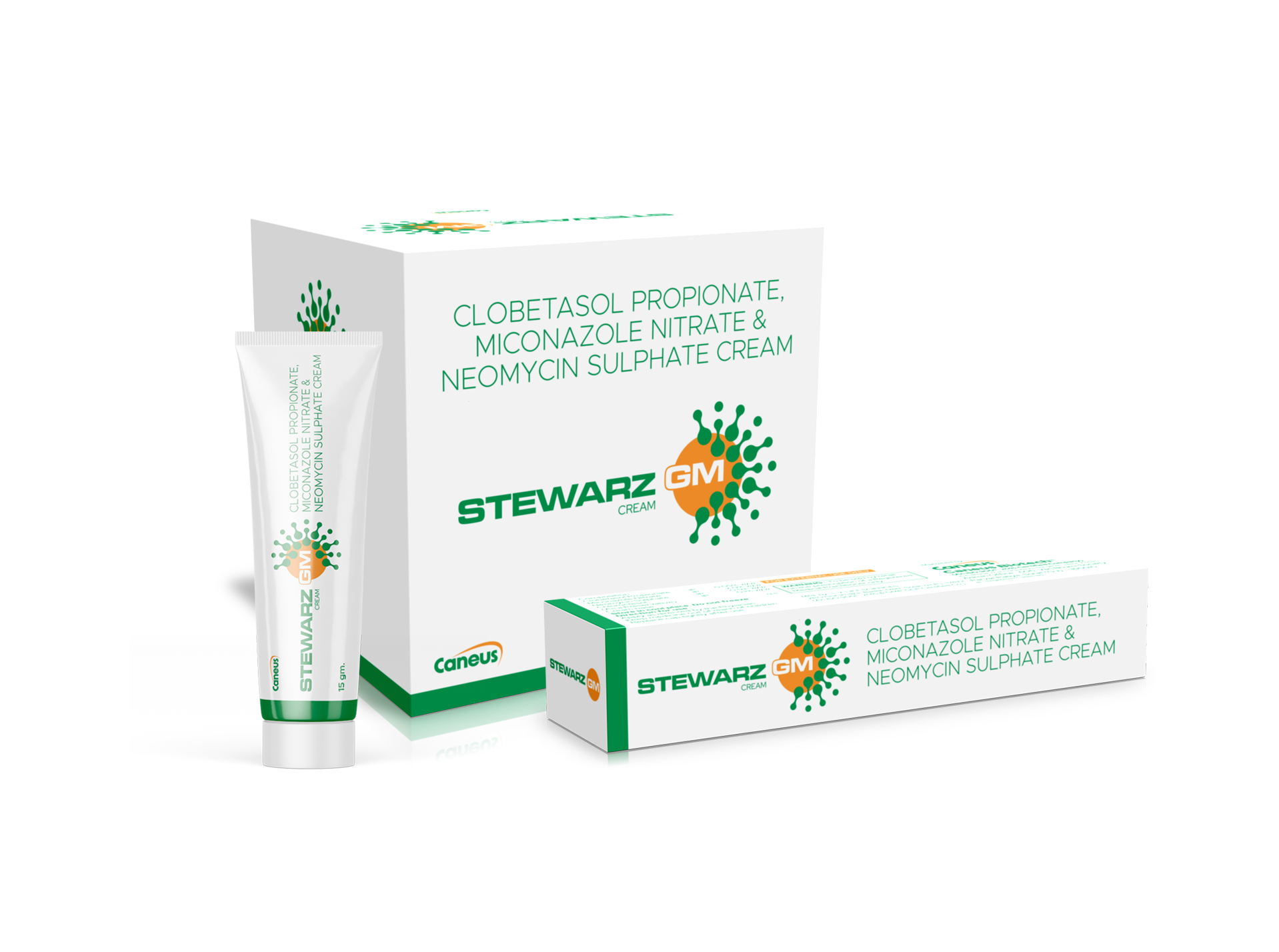
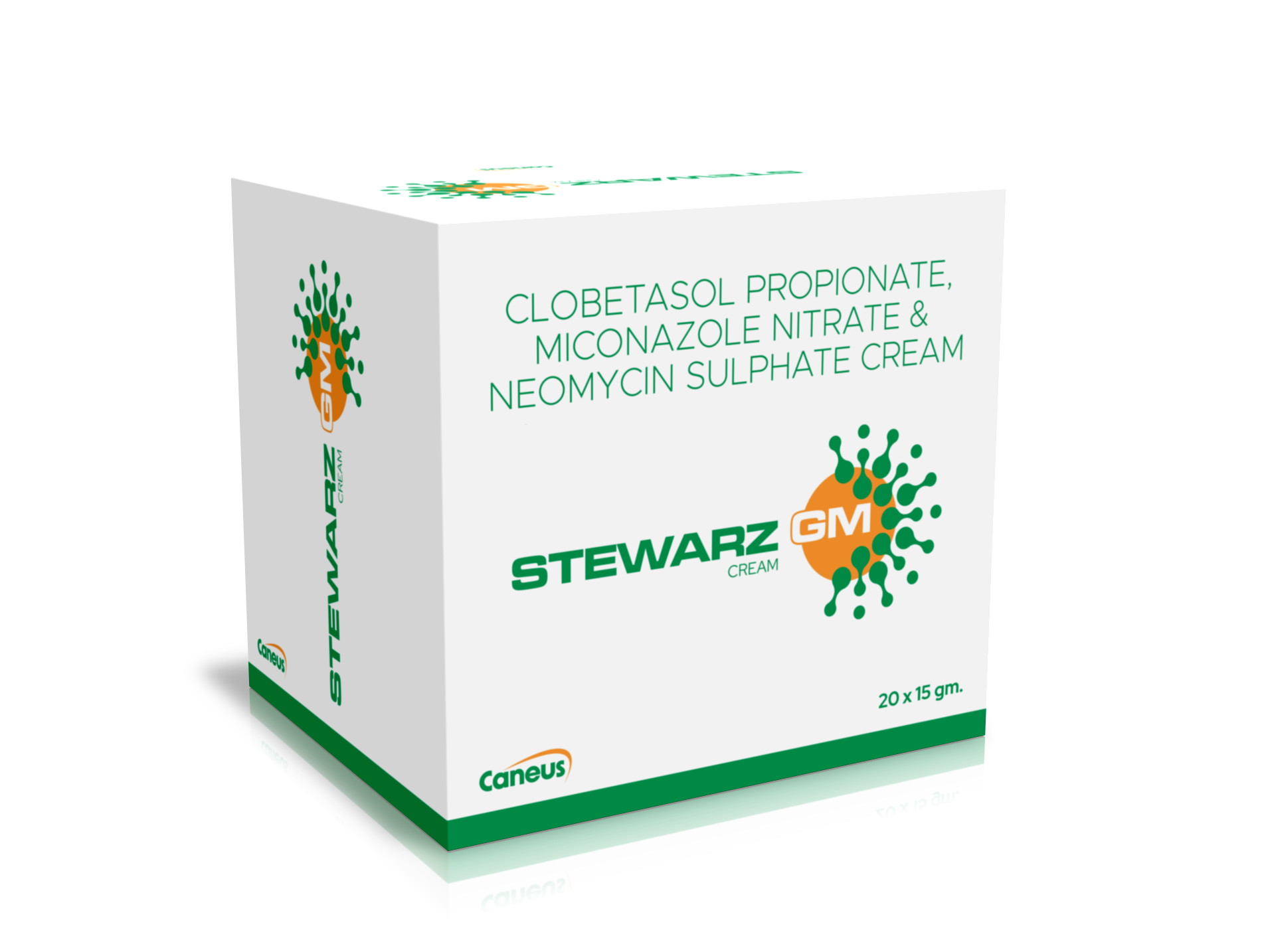
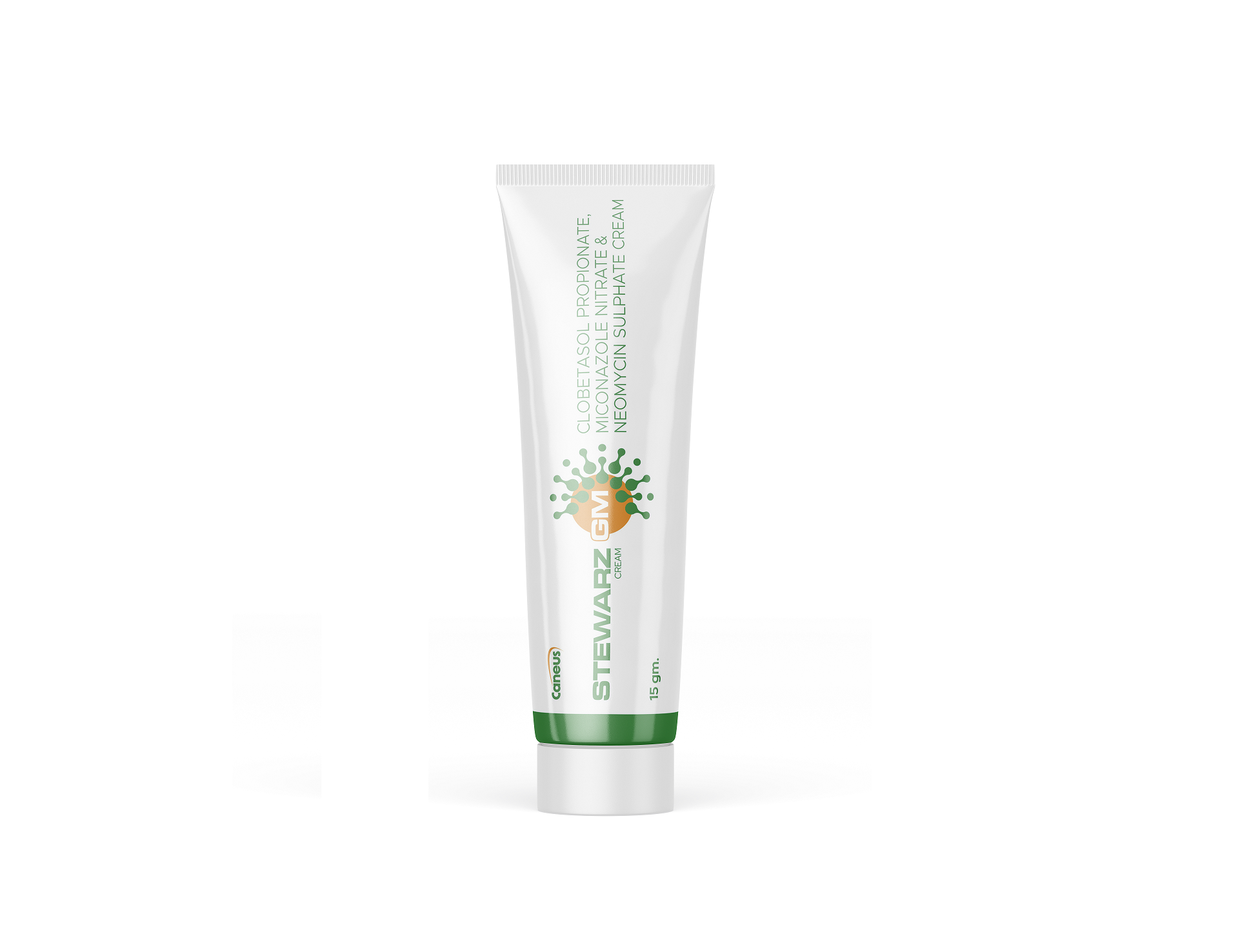
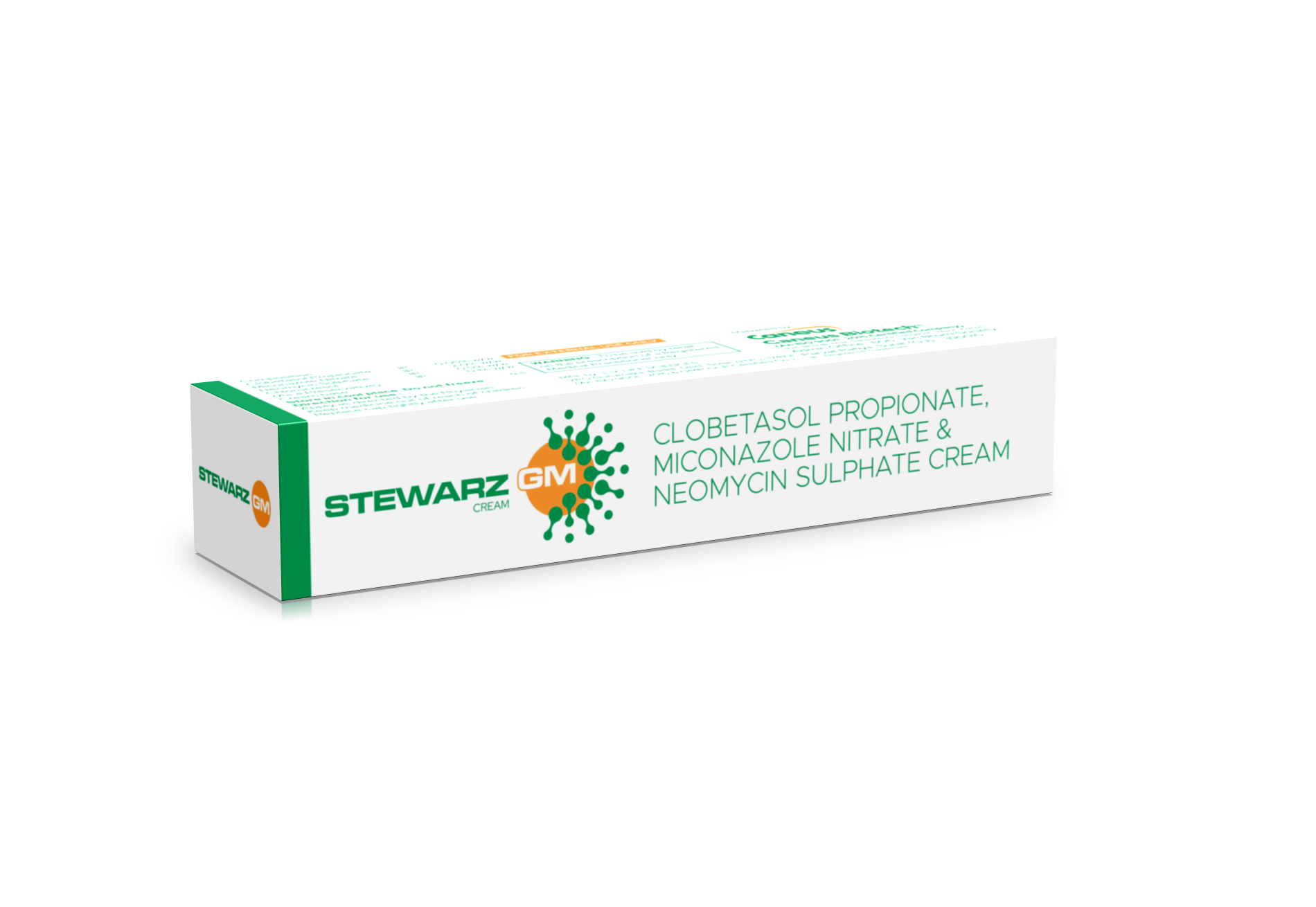
Stewarz GM
Clobetasol 0.05% w/w +Neomycin Sulphate 0.5% w/w + Miconazole Nitrate 2% w/w + Chlorocresol 0.1% Ointment
Mechanism of Action
Stewarz GM
Each ingredient targets a specific “enemy” on the skin:
-
Clobetasol Propionate (0.05%) (Stewarz GM): A “super-high potency” corticosteroid. It works by suppressing the immune response and inhibiting the release of inflammatory chemicals (prostaglandins and leukotrienes). It reduces redness, itching, and swelling.
-
Neomycin Sulphate (0.5%) (Stewarz GM): An aminoglycoside antibiotic. It inhibits bacterial protein synthesis, effectively killing or stopping the growth of various bacteria that cause skin infections.
-
Miconazole Nitrate (2%) (Stewarz GM): An antifungal agent. It disrupts the fungal cell membrane by inhibiting the synthesis of ergosterol, causing the fungal cells to leak and die.
-
Chlorocresol (0.1%) (Stewarz GM): This is a preservative with mild antiseptic properties. It keeps the cream free from microbial contamination and helps disinfect the skin surface.
Pros and Cons
The Pros
(Stewarz GM)
-
Comprehensive Action: It treats the “triple threat” (inflammation, bacteria, and fungus) simultaneously, which is helpful when the exact cause of a rash is unclear.
-
Rapid Relief: Because Clobetasol is one of the strongest steroids available, it provides very fast relief from intense itching and painful inflammation.
-
Convenience: Instead of applying three different creams, you have everything in one tube.
The Cons
(Stewarz GM)
-
Skin Thinning (Atrophy): Due to the high potency of Clobetasol, long-term use can lead to thinning of the skin, permanent stretch marks (striae), and visible spider veins.
-
Masking Infections: Steroids can sometimes “hide” an infection by reducing redness while the bacteria or fungus continues to spread underneath.
-
Systemic Absorption: If used over large areas or under bandages (occlusion), the steroid can enter the bloodstream and affect the adrenal glands.
-
Antibiotic Resistance: Overuse of Neomycin can lead to resistant bacteria or localized allergic contact dermatitis.
Connect With Us
Need help? Our team is here for you
